Taking folic acid supplements is one of the best yet simplest things you can do for the health of your unborn child, whether you are planning to get pregnant or are currently expecting. Vitamin B9, or folic acid, is essential to normal embryonic growth and development and to avoiding neural tube abnormalities. The specialists at our fertility clinic in Bangkok firmly advise all women of reproductive age to consume enough folic acid, even before they get pregnant. Discover why this important vitamin has to be on your radar by reading on, as we share our expertise on this subject below.
Why Is Folic Acid Important Before Pregnancy?
Since neural tube abnormalities can arise in the first few weeks of pregnancy—often before a woman is aware she is pregnant—women should ideally begin taking a daily folic acid supplement when attempting to conceive. The brain, skull and spinal cord develop from the neural tube as its base. Ensuring enough folic acid levels facilitates the closure of the neural tube early in pregnancy.

Accessed from: Compound Chemistry website
What Does Folic Acid Help Protect An Unborn Child From?
Preventing neural tube abnormalities like anencephaly and spina bifida depends critically on getting enough folic acid both before and throughout pregnancy. The spinal column doesn’t close entirely in spina bifida, and anencephaly is a major birth abnormality in which portions of the brain and skull are absent.
The Agency for Healthcare Research and Quality (AHRQ) reports that when taken before and during early pregnancy, folic acid can help prevent up to 70% of neural tube abnormalities. Considering the possibly disastrous consequences of these birth abnormalities, pregnant women can easily lower their baby’s risk by taking a folic acid supplement.

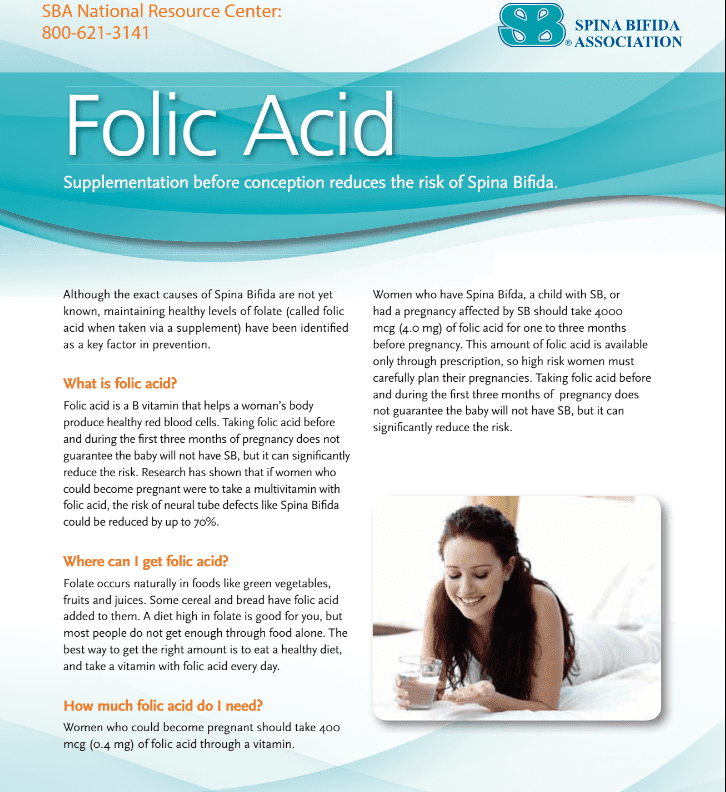
Accessed from: Spina Bifida Association website
Preventing Birth Defects Isn’t All
Although folic acid supplementation is mostly used as a method to avoid neural tube abnormalities, this B vitamin also promotes other facets of prenatal health and development. Critical activities during the fast growth of an unborn child, folic acid is engaged in gene control, cell division, and the synthesis of red blood cells.
Getting adequate folate has also been linked to reducing the risk of:
- Premature birth
- Low birth weight
- Miscarriage
- Certain childhood cancers
- Developmental delays
When Should A Pregnant Woman Begin And Stop Taking Folic Acid?
It is advisable for women wishing to become pregnant to begin taking a daily folic acid supplement at least one month before attempting to conceive. This enables the body to accumulate vitamin levels prior to the start of pregnancy. For this reason, health organizations like the CDC advise every woman who is capable of becoming pregnant to take around 400 micrograms (0.4 mg) of folic acid every day.

Accessed from: National Birth Defects Prevention Network website
Once pregnant, keep taking the advised dose of folic acid for the duration of the pregnancy and for at least four to six weeks after delivery. Recovering from childbirth also depends on getting adequate folate.
It is suggested for certain women to take increased folic acid doses when pregnant. That covers those who:
- Are pregnant with twins or multiples
- Had neural tube abnormalities during a prior pregnancy
- Suffer from certain illnesses such as diabetes
Your doctor at our fertility clinic in Bangkok can assess your unique medical history and risk factors to see if you require a greater folic acid dosage in our fertility check up service.
Folic Acid Dosage In Pregnancy
Several things determine how much folic acid a woman requires when pregnant. The often advised dose for most healthy women is:
- 400 mcg of folic acid daily during pregnancy
- 500 mcg daily when breastfeeding
Getting this much is best achieved by combining prenatal vitamins with meals high in folate, such as beans, citrus fruits, leafy greens, and fortified cereals and grains.
Higher doses, up to 4,000 mcg daily, may be recommended for women at greater risk for neural tube abnormalities. Only with supplements can one get to this increased level; a balanced diet is insufficient.
What Happens If I Don’t Take Folic Acid During Pregnancy?
Even though significant folate deficiency is uncommon in industrialized nations, if it is not treated, it can have serious effects on a pregnant woman. Insufficient folate raises the possibility of:
Neural Tube Defects
As was already indicated, preventing severe neural tube abnormalities that harm the baby’s brain and spine is mostly dependent on this vitamin. Usually, defects show up in the first few weeks of pregnancy, before most women are aware that they are expecting.
Reduced Birth Weight
Low birth weight babies from folate-deficient moms are more prone to suffer problems.
Preterm Birth
Premature delivery before 37 weeks of pregnancy has been associated with folic acid deficiency. Preterm infants face greater chances of respiratory difficulties, developmental delays, and other disorders.
Furthermore possible consequences of folate shortage during pregnancy include:
- Anemia
- Slow development rate
- Enhanced infection risk
- Complications during pregnancy
Getting Started Is Simple
The good news is that it’s simple and inexpensive to acquire enough folate via supplements and a balanced diet. Though the advantages also extend to a woman’s general health and the nursing period, folic acid is essential both before and throughout pregnancy.
The staff at our fertility clinic in Bangkok will make sure you are aware of the value of folic acid and get you started on the appropriate dosage whether you are trying to conceive or are already pregnant. We believe the greatest possibility of a safe pregnancy is provided to our patients via education.
Take no risks with the health of your unborn child; use a prenatal vitamin with the recommended amount of folic acid to ensure you have sufficient folate levels. This straightforward practice offers remarkable defense against problems related to neural tube abnormalities.
Our knowledgeable physicians and staff are here to answer any more concerns you may have regarding the value of folic acid or other pregnancy preparation techniques. Trying for a baby? Make your consultation appointment with Bangkok Central Clinic.